

GST notice का reply भेजने से पहले records को एक बार properly match करें
GST portal से ASMT-10, scrutiny notice, mismatch query या department clarification आए तो घबराकर short reply भेजना सही solution नहीं होता। पहले notice में पूछी गई बात, filed GSTR-1, GSTR-3B, purchase bills, ITC, e-way bill, bank entries और books को साथ मिलाकर देखना जरूरी है। सही records के साथ reply देने से unnecessary demand, repeated notice और compliance follow-up का risk कम हो सकता है।
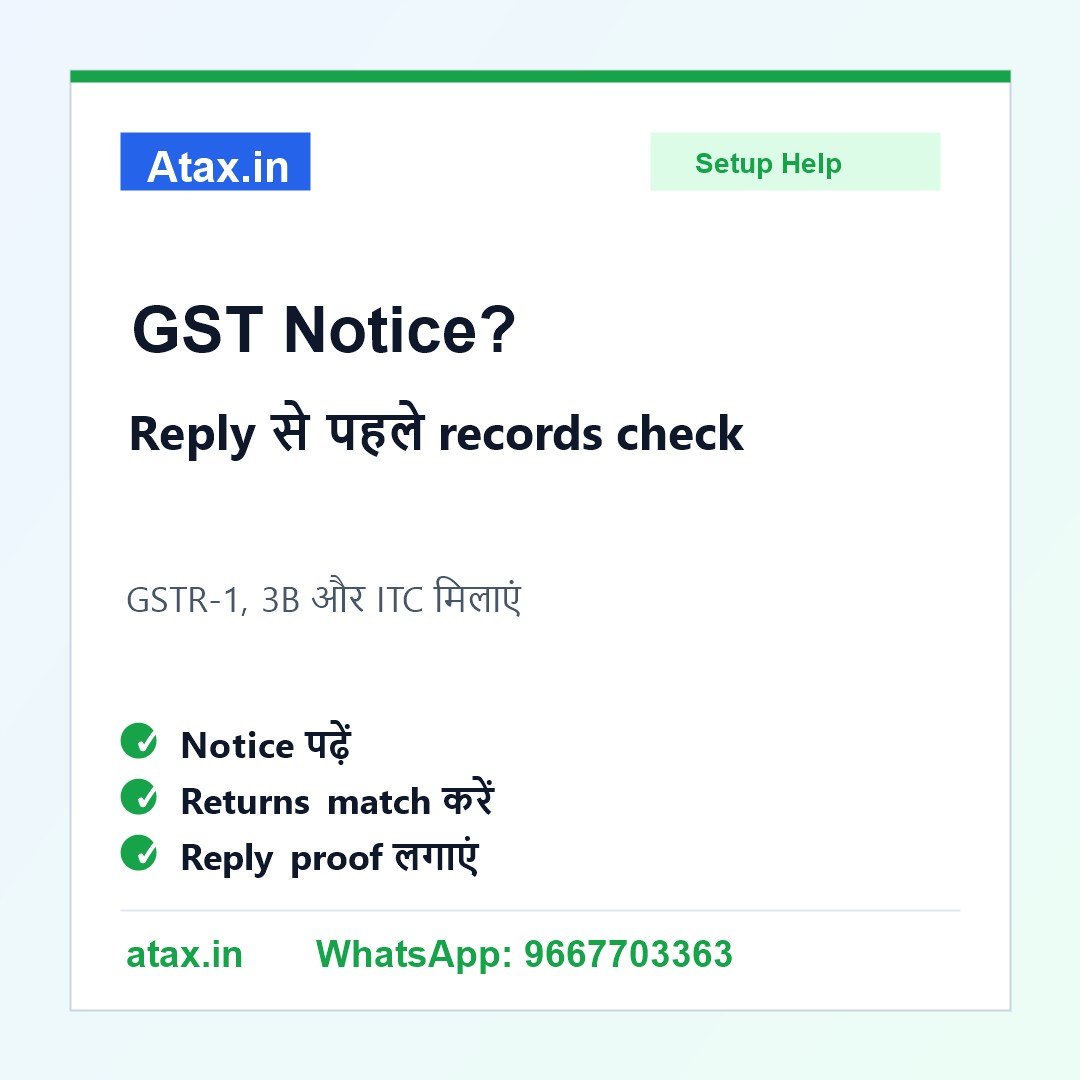
Notice में सबसे पहले क्या देखें?
Notice पढ़ते समय केवल amount देखकर decision न लें। Issue किस month, return, invoice, ITC या sales difference से जुड़ा है, यह clear करना जरूरी है।
- Notice number, date और reply due date
- Financial year और tax period
- GSTR-1 vs GSTR-3B sales difference
- ITC claimed vs supplier data mismatch
- Purchase bills, e-way bills और bank receipts
- Interest, late fee या tax demand calculation
Reply से पहले practical checklist
1. Return summary निकालें: जिस period का notice है, उसके GSTR-1, GSTR-3B और payment challan summary साथ रखें।
2. Sales records match करें: Invoice-wise sales, credit notes, debit notes, exempt sales और cancelled invoices को GSTR-1 से मिलाएं।
3. ITC support ready करें: Purchase bills, supplier GSTIN, tax amount, payment proof और goods/services receipt proof check करें।
4. Books और bank compare करें: Books में sales/purchase और bank/UPI receipts का broad matching करें ताकि reply practical रहे।
5. Reply language simple रखें: हर point का answer document reference के साथ दें। बिना support के generic line लिखना avoid करें।
एक practical example
मान लीजिए GSTR-3B में sales कम और GSTR-1 में ज्यादा दिख रही है। कई बार credit note, advance adjustment, cancelled invoice या wrong month reporting की वजह से difference आता है। अगर reply से पहले invoice register और return summary match कर ली जाए तो proper explanation और correction path clear हो सकता है।
Common mistakes जो notice reply में problem बढ़ाती हैं
Due date miss करना, बिना reconciliation के reply डालना, documents attach न करना, wrong period का data भेजना, और notice amount को समझे बिना payment करना common mistakes हैं। हर case में payment जरूरी नहीं होता; कई cases में explanation, correction, reconciliation या supporting documents enough हो सकते हैं।
Atax office में कैसे help मिलती है?
Atax.in आपकी GST notice copy, filed returns, sales register, purchase bills, e-way bill report, ITC data, bank statement और books देखकर issue-wise checklist बनाता है। फिर reply draft, supporting documents और correction/payment path practical तरीके से clear किया जा सकता है।
FAQ
Q1. GST notice आते ही tax pay करना जरूरी है?
हर case में नहीं। पहले notice reason, return data और supporting records check करें। Demand correct है या explainable difference है, यह review के बाद clear होता है।
Q2. ASMT-10 का reply कौन से documents से support करें?
Notice issue के हिसाब से GSTR-1, GSTR-3B, purchase bills, sales invoices, e-way bill report, ledger, bank statement और challan details useful हो सकते हैं।
Q3. Reply due date miss हो गई तो क्या करें?
Delay को ignore न करें। Portal status, officer communication और available response option तुरंत check करें। Professional review से next step decide करें।
Q4. Atax में क्या लेकर आएं?
Notice PDF, GST login access, sales/purchase data, bank statement, e-way bill report, challans और filed returns की copy लेकर आएं।