

Bank statement में unknown credit दिखे तो books final करने से पहले source clear करें
Business bank account में कई बार ऐसी credit entry आ जाती है जिसका customer, invoice, UPI QR, cash deposit या loan source तुरंत समझ नहीं आता। अगर books final करते समय इसे गलत ledger में डाल दिया गया तो profit, GST return, ITR और loan documents सब पर असर पड़ सकता है। इसलिए हर unknown credit का source trace करना जरूरी है।
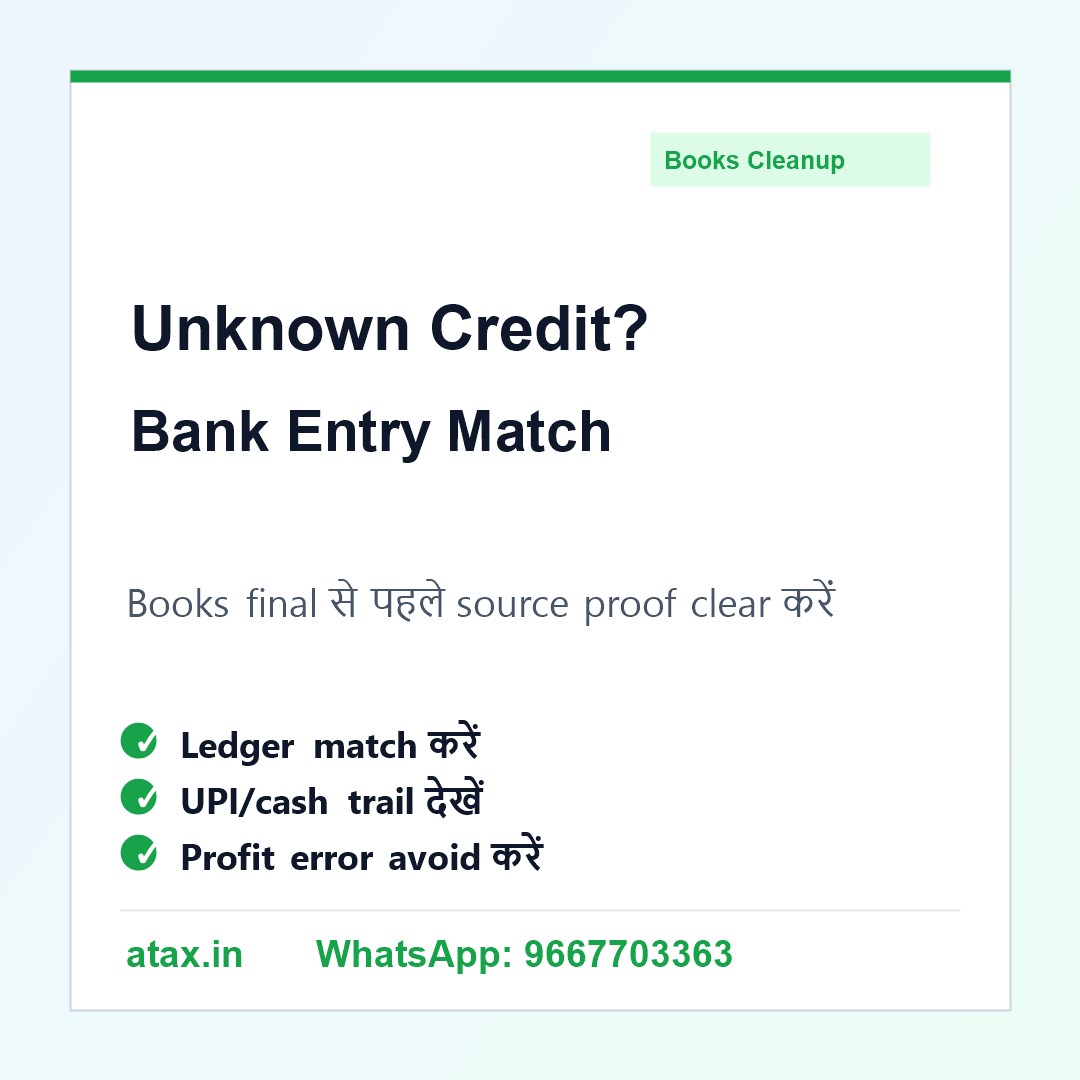
Unknown credit entry क्यों बनती है?
Small business में UPI, cash deposit, cheque, NEFT, wallet, personal transfer और customer advance mix हो जाते हैं। कई बार narration short होता है या payment किसी दूसरे नाम से आती है। बिना reconciliation के accountant को अंदाजा लगाकर entry करनी पड़ती है, और यहीं गलती शुरू होती है।
- Customer payment invoice से match नहीं हो रही
- UPI QR payment narration clear नहीं है
- Cash deposit का source record नहीं है
- Owner/personal transfer business receipt समझ लिया गया
- Loan, advance या refund entry sale में डाल दी गई
- Bank और books balance match नहीं हो रहा
Books final करने से पहले practical checklist
1. Bank narration और date देखें: Transaction date, reference number, UTR, sender name और payment mode note करें।
2. Customer ledger match करें: उसी amount/date के आसपास invoices, outstanding list और customer messages/receipts check करें।
3. UPI और cash trail अलग करें: QR reports, payment app statement, cash book और deposit slips से source identify करें।
4. Non-sale entries separate रखें: Loan, capital introduced, refund, personal transfer, contra entry या advance को sale income में न डालें।
5. Reconciliation sheet बनाएं: Unknown credits की list बनाकर source, ledger head, document proof और pending remarks लिखें।
एक practical example
मान लीजिए bank में 48,000 रुपये credit हुए और narration में सिर्फ UPI लिखा है। अगर यह customer receipt है तो invoice/ledger से link होना चाहिए। अगर owner ने personal account से पैसा डाला है तो capital/loan entry होगी। अगर इसे बिना check किए sale मान लिया गया तो profit और GST data गलत हो सकता है।
सबसे common गलती
Unknown credit को “sales” या “misc income” में डालकर books close कर देना आसान लगता है, लेकिन बाद में GST mismatch, ITR income mismatch, loan file query या partner/customer dispute में problem आती है। Better है entry final करने से पहले source proof attach करें।
FAQ
Q1. Unknown credit को sale मान सकते हैं?
Source clear किए बिना नहीं। पहले invoice, customer ledger, UPI report और bank proof match करना चाहिए।
Q2. Personal transfer business bank में आया है तो क्या करें?
उसे sale income में डालने के बजाय owner capital/loan/contra nature के हिसाब से record करना चाहिए।
Q3. Cash deposit का proof नहीं है तो?
Cash book, daily sales record, deposit slip और supporting note बनाकर books में proper trail रखना चाहिए।
Q4. Atax office क्या help कर सकता है?
Atax.in bank statement, UPI reports, sales invoices, customer ledger और cash book compare करके unknown credits की reconciliation sheet और correct accounting entries बना सकता है।