

Business शुरू करने से पहले registration नहीं, पूरी document और accounting chain तैयार करें
कई नए business PAN या GST registration के बाद invoice, bank, books और expense records पर ध्यान देते हैं। बाद में sales, purchases, GST return, ITR और loan documentation में mismatch आता है। शुरुआत में structure, registrations, bank trail, invoice format और digital accounting process तय करने से compliance आसान रहता है।
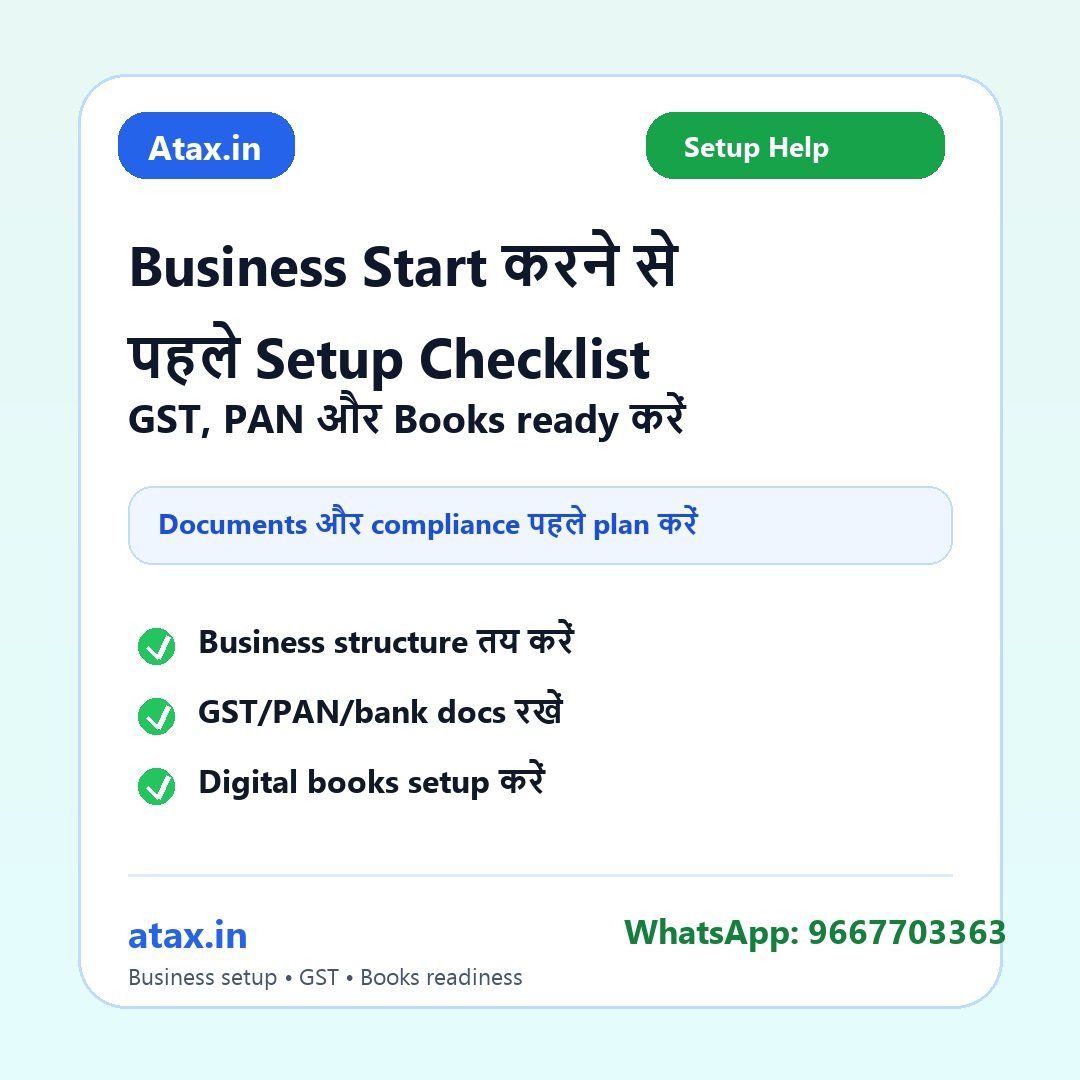
Business setup में कौन-कौन से decisions पहले लें?
- Business activity, ownership और सही legal structure
- Trade name, address proof और authorised signatory
- Separate business bank account और payment collection method
- GST applicability और invoice requirements
- Accounting software, chart of accounts और backup process
- Monthly compliance calendar और document responsibility
Documents की practical checklist
1. Identity: PAN, Aadhaar/KYC, photographs और authorised person details.
2. Address: Rent agreement/ownership proof, electricity bill, NOC और business place photographs जहां applicable हों।
3. Business proof: Constitution document, partnership/LLP/company papers, trade licence या professional registration जहां relevant हो।
4. Banking: Current account, cancelled cheque, payment gateway और UPI trail का clear setup.
5. Billing: Invoice series, tax fields, HSN/SAC, credit note/debit note और terms.
6. Books: Sales, purchase, expense, stock, receivable/payable और bank ledgers का opening structure.
GST और billing setup में common mistakes
- Personal account में business receipts लेना
- Invoice number series या tax fields बिना review के शुरू करना
- Business और personal expenses एक ही ledger में रखना
- Cash/UPI/online receipts का daily record न रखना
- Purchase invoices और vendor GST details preserve न करना
- Credit note, advance और refund का process तय न करना
- Return due dates का calendar नहीं बनाना
एक practical example
मान लीजिए एक trading business ने GST registration और current account खोल लिया, लेकिन UPI collections personal account में आती रहीं और purchases अलग-अलग names से खरीदी गईं। साल के अंत में bank, GST sales और books match नहीं हुए। शुरुआत से separate collection account, invoice series, purchase folder और daily reconciliation होता तो file clean रहती।
Digital records का simple system
हर month sales register, purchase register, bank statement, expense proofs, GST returns, challans और stock report का folder बनाएं। File naming में month, document type और supplier/customer name रखें। Cloud/offsite backup, access control और monthly restore check रखें। Business loan या notice आने पर यही records सबसे अधिक काम आते हैं।
Monthly compliance calendar में क्या रखें?
GST returns, TDS/TCS जहां applicable हो, advance tax, payroll, vendor payment proofs, bank reconciliation, receivable follow-up, stock count और backup review की recurring dates लिखें। Calendar में responsible person और proof-storage location भी दर्ज करें।
Atax office में कैसे help मिलती है?
Atax.in business activity और expected transactions समझकर structure/document checklist, GST/PAN application readiness, invoice format, accounting chart, digital folders और monthly compliance workflow review करता है। इससे शुरुआत से records loan, ITR और GST review के लिए usable रहते हैं।
FAQ
Q1. GST registration से पहले accounting setup जरूरी है?
हाँ, sales, purchase, expense और bank records का process पहले तय करने से बाद की reconciliation आसान होती है।
Q2. क्या business के लिए separate bank account रखें?
अलग account से receipts, expenses और tax trail साफ रहती है तथा loan/document review आसान होता है।
Q3. Invoice format कौन बनाता है?
Business activity, tax status और transaction type के अनुसार invoice fields तय करें; launch से पहले professional review उपयोगी है।
Q4. Digital books का backup कैसे रखें?
Regular local plus secure offsite/cloud backup रखें और restore test करें।
Q5. Atax में क्या लेकर आएं?
PAN/KYC, address proof, business papers, expected activity, bank details और existing billing/expense records लेकर आएं।