

Marketplace से आया net payout आपकी पूरी GST sales नहीं है
Online seller के bank account में order value से कम रकम आना सामान्य है: returns, platform commission, shipping/other charges और TCS settlement में अलग-अलग कट सकते हैं। इसलिए सिर्फ bank credit को sales मानना या हर कटौती को GST tax समझना reconciliation बिगाड़ सकता है। Orders, invoices, returns, operator की GSTR-8 और अपने cash ledger को एक ही period में मिलाएँ।
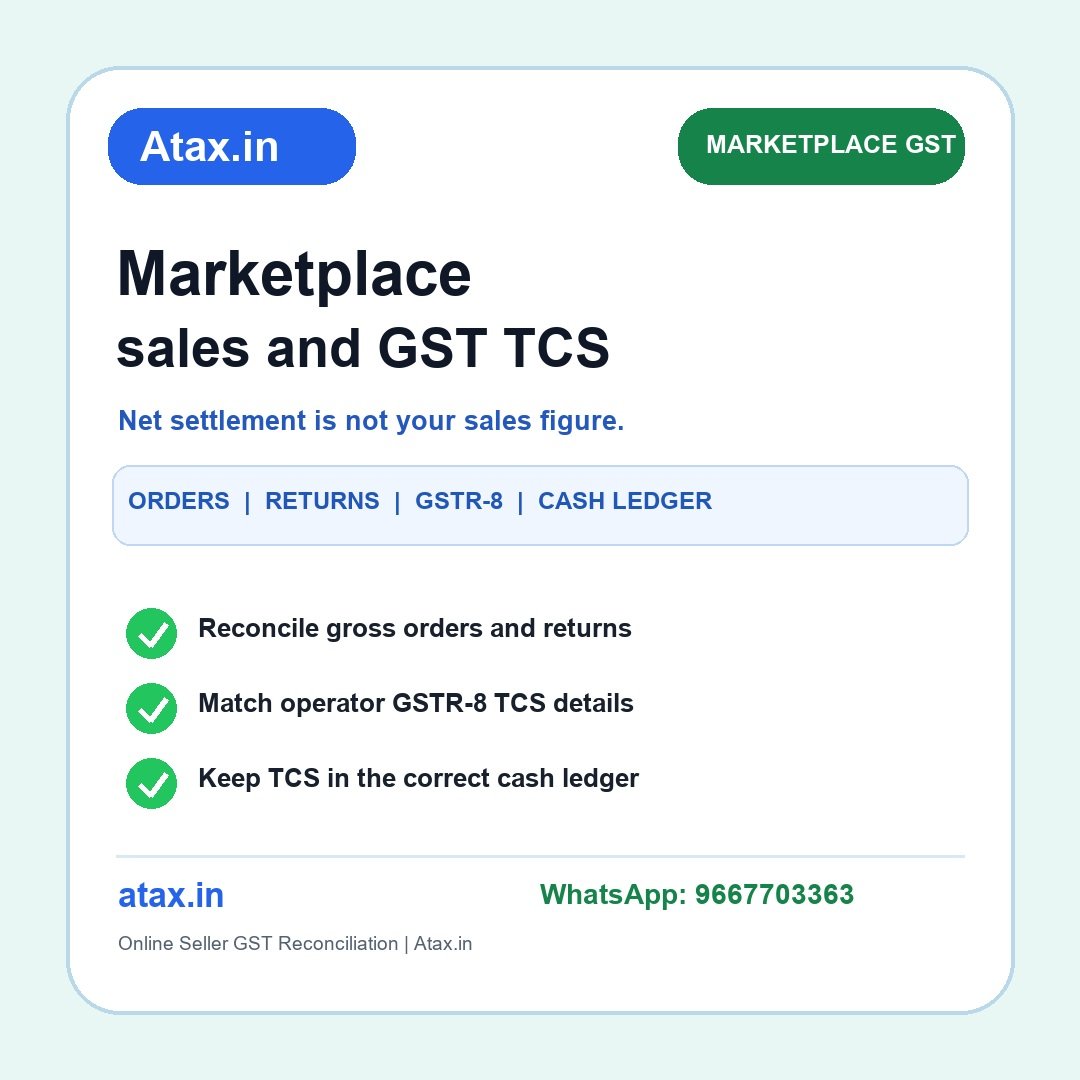
चार figures को अलग रखें
- Gross order/supply value: सफल taxable supplies और invoice-level detail; cancellation/return का असर अलग दिखाएँ।
- Marketplace settlement: ग्राहक से collection के बाद refunds, commission, shipping/ads और अन्य contractual deductions घटाकर bank में आया net amount।
- GSTR-8 TCS: operator द्वारा Section 52 के तहत report/ जमा किया गया tax collection at source; यह seller के cash ledger में credit होने का आधार बनता है।
- GST liability: seller की अपनी outward supply और return calculation; platform fees/TCS को sales figure के साथ net-off करके न छिपाएँ।
उदाहरण: payout कम क्यों आया?
मान लें महीने में platform पर कई orders हुए। कुछ orders cancel/return हुए; platform ने अपनी service fee और shipping charges काटे; eligible transactions पर TCS collect हुआ; फिर बाकी रकम settlement में bank को भेजी। Bank credit इसलिए न तो gross orders के बराबर होगा, न उससे सीधे taxable turnover निकलेगा। हर line को order report, seller invoice, credit note/return record और fee invoice से जोड़कर देखें।
यदि return किसी अगले महीने में हुआ या platform statement settlement और supply month अलग दिखाते हैं, तो timing bridge बनाएं। Period difference को बिना explanation “GST mismatch” कहकर correction file न करें।
GSTR-1, GSTR-8 और cash ledger कैसे मिलाएँ
- GSTIN और period तय करें: Seller GSTIN, marketplace/operator GSTIN, state और tax period ठीक रखें। Multiple marketplace accounts हों तो अलग schedules बनाएं।
- Order-level sales निकालें: delivered/accepted orders, cancellations और customer returns अलग करें। Issued invoices और credit notes की dates/values match करें।
- GSTR-1 reporting जाँचें: applicable e-commerce supplies/TCS sections में operator-wise values को filed return के against compare करें। GSTR-1 portal guidance में ECO supplies के लिए relevant table/tile और Section 52 बनाम Section 9(5) paths अलग दिखते हैं; आपकी supply पर कौन-सा लागू है, तय करें।
- Operator GSTR-8 से TCS मिलाएँ: Marketplace seller statement और operator-wise period report लें। CBIC के अनुसार operator का GSTR-8 statement seller के TCS credit का आधार है।
- Electronic Cash Ledger देखें: Expected TCS credit सही GSTIN और head में दिखाई दिया या नहीं जाँचें। TCS credit cash ledger का है; इसे purchase ITC/credit ledger समझकर न दर्ज करें।
- Settlement का bridge बनाएँ: Gross collection less returns, fees, TCS और contractual adjustments से net bank settlement तक reconciliation sheet बनाएं। Fee invoices को अलग expense/ITC review में रखें।
- Mismatch को source पर सुधारें: गलत GSTIN, period, net value, return/cancellation या operator statement में गलती किस तरफ है, पहचानें। फिर applicable amendment/return route या marketplace escalation चुनें; blind duplicate reporting न करें।
एक छोटी reconciliation sheet में ये columns रखें
- Order ID, invoice number/date और customer state;
- Taxable value, tax rate और IGST या CGST/SGST split;
- Cancellation/return date, credit note number और adjustment period;
- Operator name/GSTIN, GSTR-8 period, reported net value और TCS amount;
- Marketplace commission/logistics invoice, tax charged और ITC eligibility review;
- Settlement reference/date, gross collection, each deduction और bank credit;
- GSTR-1 filed amount, cash-ledger TCS credit और variance/reason.
अलग transaction types पर GST treatment अलग हो सकता है—विशेषकर Section 9(5) notified services, exempt/non-taxable supplies और own-account sales में। Marketplace report के label को देखकर सभी entries का एक ही treatment न मानें।
Common mistakes
- Bank payout को ही sales turnover मानकर कम reporting;
- Returns/cancellations का month-end cut-off न मिलाना;
- TCS cash-ledger credit को GSTR-2B input tax credit समझना;
- Marketplace fee को gross sale से घटाकर books में केवल net receipt रखना;
- GSTR-8 filed न होने या गलत GSTIN में filed होने पर operator statement न माँगना;
- GSTR-1 में Section 52 collection और Section 9(5) liability वाले supplies को एक साथ जोड़ना।
FAQ
क्या GSTR-8 TCS मेरा ITC है?
नहीं। Section 52 के तहत seller को मिलने वाला TCS credit electronic cash ledger में जाता है; इसे purchase ITC के साथ mix न करें।
क्या हर marketplace settlement पर TCS होता है?
हर payout line पर नहीं। Section 52 taxable supplies और consideration collection के statutory tests लागू करता है; Section 9(5), exempt supplies, returns और own-account transactions का treatment अलग हो सकता है।
GSTR-8 में TCS दिख रहा है पर cash ledger में नहीं?
Operator GSTIN, seller GSTIN, tax period, filed status और head-wise credit मिलाएँ। Mismatch हो तो operator statement और portal ledger evidence के साथ correction/escalation करें।
GSTR-8 में gross orders नहीं मिलते, क्या गलती है?
Section 52 collection net taxable supplies और returns के आधार पर निर्धारित होती है; gross order report, seller invoices और GSTR-8 का scope एक जैसा न भी हो सकता है। Return/cancellation-period bridge बनाकर जाँचें।
Cash ledger में TCS बचा है तो क्या refund माँग सकते हैं?
Applicable law के अनुसार excess balance refund route संभव हो सकता है; पहले liabilities, ledger balance और refund eligibility/documentation जाँचें। Credit आने मात्र से refund मंजूर होना तय नहीं है।